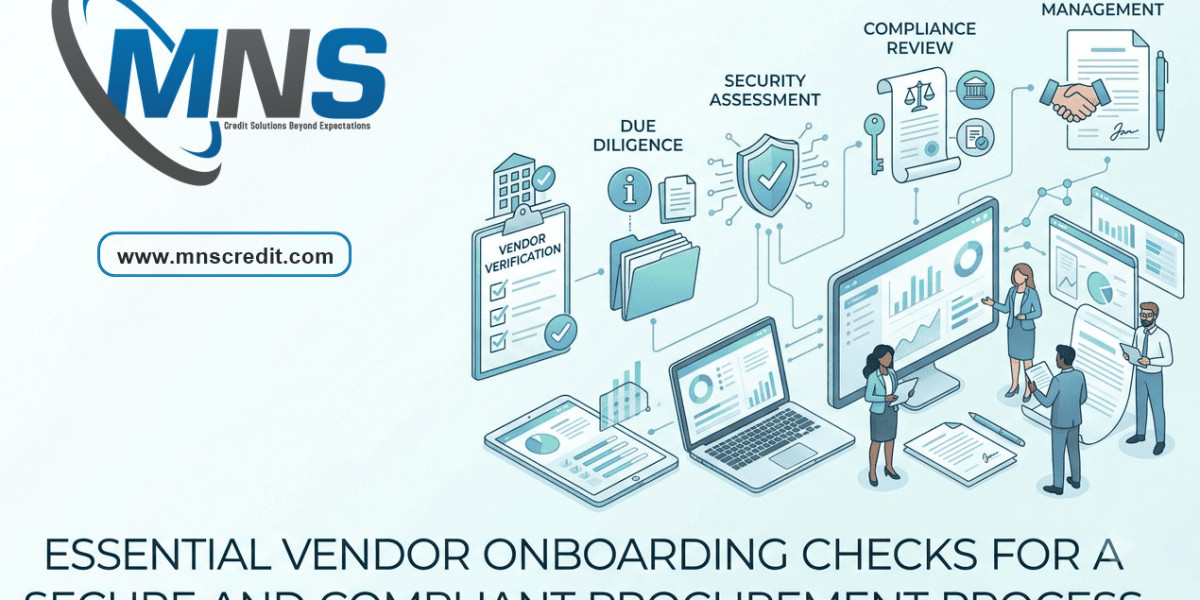

Procurement teams today are under more pressure than ever to onboard vendors quickly without compromising on security or regulatory compliance. A single overlooked check during onboarding — an unverified GST registration, a hidden litigation history, or an undisclosed related-party relationship — can expose a business to financial loss, regulatory penalties, and reputational damage months or years down the line. Vendor onboarding is no longer a paperwork formality; it is the first and most important control point in the entire procurement lifecycle.
This article breaks down the essential vendor onboarding checks that every procurement, finance, and compliance team should build into their supplier acceptance process, along with the red flags that signal a vendor needs deeper scrutiny before a purchase order is ever raised.
Why Vendor Onboarding Is the First Line of Defense in Procurement
Every rupee that flows out of an organisation through procurement carries risk if the recipient has not been properly verified. Weak onboarding controls create openings for shell companies, invoice fraud, sanctioned entities, and financially distressed suppliers to enter the supply chain undetected. Regulators in India — through the Ministry of Corporate Affairs (MCA), the Reserve Bank of India's KYC Master Directions, and the Prevention of Money Laundering Act (PMLA) — have progressively tightened expectations around counterparty verification, particularly for regulated entities and their vendor ecosystems. A structured onboarding process is what allows a business to demonstrate, on record, that reasonable diligence was performed before a commercial relationship began.
Core Vendor Onboarding Checks Every Procurement Team Should Perform
1. Legal entity and registration verification. Confirm the vendor's legal existence through MCA21 records for companies and LLPs, GST registration status, PAN validity, and Udyam registration where MSME benefits are claimed. This confirms the entity is real, active, and not struck off or under liquidation.
2. Beneficial ownership and related-party mapping. Identify the individuals who actually control the vendor entity. This step catches conflicts of interest, related-party transactions that were not disclosed, and structures designed to obscure ownership.
3. Financial health and creditworthiness review. A vendor's financial statements, credit rating, and payment track record reveal whether it has the working capital and stability to fulfil orders reliably over the life of a contract, not just at the point of signing.
4. Regulatory, sanctions, and PEP screening. Screen the vendor and its key stakeholders against sanctions lists, adverse media, and politically exposed person (PEP) databases. This is a core AML/KYC control, particularly important where the vendor relationship crosses borders.
5. Litigation and dispute history. A pattern of unresolved commercial litigation, consumer complaints, or regulatory action is often a leading indicator of operational or governance problems that will surface later in the relationship.
6. Bank account and reference verification. Independently verifying banking details before the first payment prevents a common and costly fraud vector — invoice redirection to a fraudulent account.
7. Operational capability assessment. For critical or high-value vendors, a site visit or virtual verification confirms that the vendor has the physical infrastructure, workforce, and capacity claimed in its proposal.
8. Data security and confidentiality safeguards. Where a vendor will have access to sensitive data or systems, onboarding should include a review of their data protection practices and binding confidentiality clauses in the contract.
Red Flags to Watch For During Onboarding
Procurement teams should treat the following as triggers for enhanced review rather than automatic rejection: a registered address that is a residential unit or shared co-working space with no independent verification; frequent changes in company name, directors, or registered office; financial statements that are unusually thin or inconsistent with the scale of business proposed; reluctance to share GST returns, bank statements, or director KYC; and ownership structures involving multiple layers of holding companies, particularly across jurisdictions with weaker disclosure norms.
Building a Repeatable Vendor Onboarding Framework
The most resilient procurement functions do not treat onboarding as a one-time checklist but as a tiered framework. Low-value, low-risk vendors can move through a lighter verification path, while high-value, high-risk, or first-time international vendors are routed through enhanced due diligence. Each tier should have clearly defined documentation requirements, approval thresholds, and re-verification triggers — such as a significant contract renewal, a change in vendor ownership, or a lapse of more than twelve months since the last check. Embedding these rules into the procurement policy, rather than leaving them to individual buyer discretion, is what makes the control auditable and consistent across business units.
How Technology and Third-Party Verification Support Faster Onboarding
Manual verification of every data point — MCA filings, GST status, sanctions lists, litigation records — is slow and difficult to scale across hundreds or thousands of vendors. This is where structured vendor due diligence and business verification services add real value, consolidating registry data, financial indicators, and compliance screening into a single, decision-ready report. Instead of a procurement analyst chasing documents across multiple government portals, a consolidated due diligence report surfaces the verification outcome, the risk flags, and the supporting evidence in one place, cutting onboarding turnaround time while strengthening the audit trail.
Assigning Clear Ownership Across Procurement, Finance, and Compliance
Onboarding checks tend to fail not because the checklist is wrong, but because no single function owns it end to end. Procurement teams are focused on speed and price, finance teams are focused on payment terms, and compliance teams are focused on regulatory exposure — and without a shared workflow, each function assumes someone else has verified the vendor. The most effective onboarding programs assign explicit ownership: procurement collects documentation, compliance performs screening and sign-off, and finance verifies banking details before the vendor master record is activated in the ERP system. Documenting this handoff, with clear timelines and escalation paths for incomplete files, closes the gap where fraudulent or non-compliant vendors most often slip through.
Measuring the Effectiveness of Your Onboarding Process
A vendor onboarding framework should be measured, not just implemented and forgotten. Useful metrics include the average time to onboard a vendor by risk tier, the percentage of vendors flagged for enhanced due diligence, the proportion of vendor master records with expired or missing verification documents, and the number of onboarding exceptions approved outside standard policy. Reviewing these metrics quarterly helps procurement and compliance leaders identify where the process is creating unnecessary friction for low-risk vendors, and where it is not catching enough for high-risk ones — allowing the framework to be recalibrated rather than left static as the vendor base grows.
Conclusion
Vendor onboarding checks are not a bureaucratic hurdle; they are the mechanism through which a business protects its cash flow, its compliance standing, and its supply chain continuity. A well-designed onboarding framework — covering legal, financial, regulatory, and operational verification, with clear ownership and measurable outcomes — allows procurement teams to onboard confidently and quickly, while giving compliance and finance functions the assurance that every vendor relationship began on solid ground. Businesses that invest in structured, technology-supported vendor verification are better positioned to scale their supplier base without scaling their risk exposure.
For organisations looking to standardise this process, working with an experienced due diligence partner such as MNS Credit Management Group can help embed thorough, consistent vendor onboarding checks into the procurement workflow from day one.