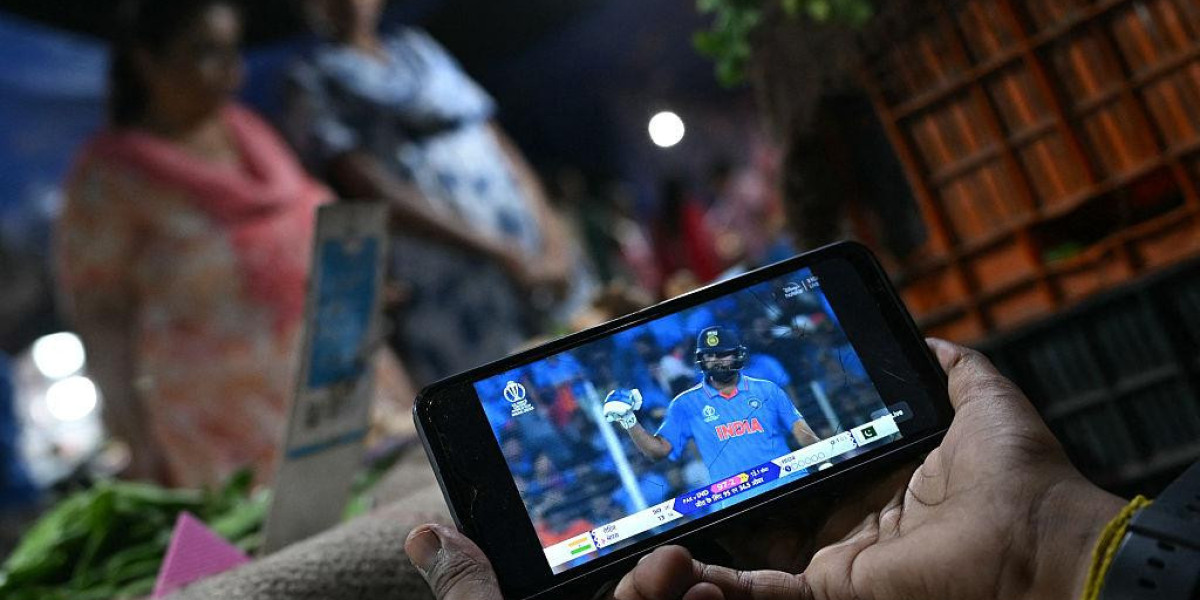

A fan can watch a 20-second clip of a spectacular goal during a lunch break, see a 30-second cricket six while commuting, or catch the final rally of a badminton match before going to bed. A full match, on the other hand, may require several hours of uninterrupted attention.
That difference explains a lot about how sports viewing is changing.
Indian sports fans have more access to matches than ever, yet many are increasingly discovering and following sport through short videos, highlights, social posts and quick recaps. According to Deloitte and Google, India has around 655 million sports fans, and 93% of Gen Z sports fans consume sports content digitally. The same research found that fans spend 20% more time with non-live sports content than with live events.
This does not necessarily mean people have stopped caring about full matches. Instead, the way they fit sport into everyday life has changed.
A five-minute highlight package can tell you what happened. A full match tells you why it happened. Increasingly, fans want both—but they often use short-form content as the starting point.
Why Short-Form Sports Content Fits Modern Fan Habits
Time is becoming the most valuable part of the viewing experience
The biggest advantage of highlights is simple: they respect the viewer's time.
Consider a cricket match. A T20 game can take several hours, while an ODI can occupy most of an afternoon. Test cricket requires an even bigger commitment.
Now compare that with a highlights video.
In five to ten minutes, a fan can see the wickets, boundaries, major partnerships, dropped catches and decisive moments. Someone who missed the match can quickly understand the basic story before deciding whether the full replay is worth watching.
This is particularly relevant in India, where sports fans follow several competitions at the same time.
A person might want to keep up with cricket, football, badminton, Formula 1 and athletics without having enough free time to watch everything live.
Short-form content solves that problem.
The same pattern appears globally. Deloitte's 2025 sports media analysis found that YouTube sports-content viewing increased 45% in 2024, reaching 35 billion hours, with much of that viewing involving on-demand content.
The appeal is not difficult to understand.
Imagine opening your phone at 8:30 a.m. and discovering that India played a major cricket match overnight. You do not necessarily need to watch three hours of footage before work. A concise highlights package gives you enough context to join the conversation.
Later, if the match turns out to be particularly important, you can watch the extended replay.
Short-form content therefore works as a filter.
Social media has turned highlights into a discovery engine
Sports highlights used to arrive mainly through television programmes or newspaper sports pages.
Today, they can appear in a social feed within minutes of an important moment.
A spectacular catch, last-minute goal, six, knockout punch or race overtake can be clipped, captioned and shared almost immediately.
That speed changes the relationship between the fan and the event.
You no longer need to search for a match recap. The recap can find you.
Deloitte's 2026 Digital Media Trends research found that 52% of fans use social platforms as their primary way of discovering new content, rising to 73% among Gen Z fans. It also found that 44% typically discover content on social media and then go elsewhere to watch the full version.
That last point is particularly important.
Short-form video is not necessarily replacing long-form sport. In many cases, it is acting as the trailer.
A 20-second clip creates curiosity. The full match provides the complete experience.
For sports websites and publishers, this means a good short video can become the first step in a much longer fan journey.
Algorithms understand what individual fans want
Traditional television gives millions of viewers roughly the same programme.
Social platforms work differently.
Their recommendation systems learn what an individual user watches, skips, likes and shares.
If someone repeatedly watches Indian cricket clips, their feed is likely to contain more cricket. If another person watches badminton rallies and Formula 1 overtakes, their recommendations can gradually become more specialised.
This creates a highly personalised sports experience.
A fan does not have to search through a television schedule to find something interesting.
The content arrives automatically.
That convenience is especially powerful for younger viewers, who are accustomed to personalised feeds across entertainment, music and gaming.
It also explains why sports organisations increasingly produce multiple versions of the same event: a full broadcast, an extended highlights package, individual clips, interviews, behind-the-scenes footage and social-first edits.
Each format serves a different purpose.
Mobile viewing has changed what "watching sport" means
The smartphone has effectively turned sports viewing into something people can do almost anywhere.
Fans watch clips while travelling, during breaks at work, between classes or while waiting for friends.
That would have been difficult with traditional television.
A full match usually requires a deliberate decision: sit down, turn on the screen and commit a block of time.
A short clip requires almost no preparation.
This does not make the fan less interested.
It simply makes fandom more flexible.
Deloitte research on sports viewing also shows that younger fans have a broader mix of preferred sports content. While live sport remains important, Gen Z and millennial audiences show greater interest in highlights, clips, documentaries and sports-related social media videos than older generations.

Short videos create an emotional hit quickly
There is another reason highlights work so well: emotion.
A great sports moment often does not need much explanation.
A last-ball six.
A goalkeeper's unbelievable save.
A sprinter winning by a fraction of a second.
A badminton player producing an impossible defensive rally.
A Formula 1 driver making a late overtake.
These moments can be understood almost instantly.
The viewer experiences surprise, tension and excitement within seconds.
That makes them ideal for short-form platforms.
A full match builds emotion slowly. A highlight concentrates it.
This is similar to reading a movie trailer versus watching the entire film. The trailer gives you the strongest moments and creates curiosity, while the full movie provides character development and context.
Sports highlights work in much the same way.
"Gold365 online" and the wider sports-search ecosystem
Modern sports fans do not consume information in one place.
They may watch a highlight on Instagram, check a score through Google, read an article about an athlete, watch a longer YouTube recap and then return to social media for reactions.
This fragmented journey has created a much larger sports-information ecosystem.
Someone searching for gold365 online may encounter sports-related content while looking for updates, but fans should distinguish promotional or third-party material from official competition information.
For accurate scores, fixtures, statistics and tournament results, official leagues, governing bodies and recognised broadcasters are generally the safest sources.
The broader lesson is that fans now move between platforms depending on what they need.
A short video is best for a quick emotional update.
A statistics page is better for detailed information.
A full broadcast is best for understanding the complete contest.
No single format does everything well.
What Fans Gain—and Lose—By Watching Only Highlights
The advantages are obvious, but context can disappear
Short-form content is extremely efficient.
It helps fans:
- Catch up after missing a match
- Follow several sports at once
- Discover new athletes
- Share memorable moments quickly
- Stay informed during busy days
- Find important moments without watching hours of footage
- Participate in online sports conversations
- Discover competitions they might otherwise ignore
But there is a trade-off.
Highlights can remove context.
A batter's six may look spectacular without showing the difficult deliveries that came before it. A football goal may seem inevitable even though the opposing team dominated for 80 minutes. A tennis winner may appear extraordinary without showing the exhausting rally that created the opportunity.
This matters because sport is often about patterns rather than isolated moments.
The full match shows those patterns.
Why full matches still matter
Live sport has something highlights cannot fully reproduce: uncertainty.
When you watch a highlight, you already know the outcome.
When you watch live, you do not.
That uncertainty creates tension.
A cricket chase feels completely different when you do not know whether the final over will produce a six or a wicket.
A football match feels different when a team is defending a one-goal lead with ten minutes remaining.
A tennis match can turn on one point that would barely make a highlight reel.
This is why live sport remains valuable even as short-form viewing grows.
Deloitte's research confirms that live sport continues to hold a central place in fandom, even though younger audiences consume a wider range of sports content.
Short-form and long-form therefore serve different emotional purposes.
The rise of personalised highlights
The next stage could be even more interesting.
Instead of receiving one standard highlights package, fans may increasingly receive personalised versions.
Imagine telling a sports platform:
"Show me India's batting highlights, the best bowling spells and the final 10 overs."
Or:
"Give me every major moment involving my favourite player."
AI-assisted systems are making this type of personalisation increasingly practical. Deloitte's 2026 research found that 32% of sports fans surveyed would like personalised highlight reels and commentary based on their favourite teams and athletes.
That could fundamentally change sports discovery.
A casual fan might receive a two-minute summary.
A serious supporter might receive a 20-minute tactical recap.
A fantasy or statistics-focused viewer could receive a data-heavy package.
The underlying match remains the same, but the viewing experience becomes personalised.
What this means for sports broadcasters and creators
Sports organisations now have to think beyond the traditional broadcast.
A successful sports media strategy may need several layers:
- Live match coverage for committed fans
- Short clips for discovery
- Highlights for catch-up viewing
- Interviews for personality and storytelling
- Tactical analysis for serious followers
- Behind-the-scenes footage for emotional connection
- Data visualisations for statistics-focused audiences
This is particularly important because competition for attention is no longer limited to other sports.
A sports match is competing with streaming shows, gaming, music, creators, messaging apps and thousands of other pieces of content.
Deloitte has described this environment as increasingly fragmented, with social platforms offering free, algorithmically personalised sports clips and highlights.
The winning strategy is therefore not necessarily to make every fan watch more hours.
It is to make every minute more valuable.
How fans can get the best of both worlds
The smartest approach is not choosing between highlights and full matches.
Use each format for what it does best.
If you missed a match, start with the highlights.
If the contest looks important or unusually competitive, watch the full replay.
If you are following a particular athlete, look for interviews and tactical analysis.
If you want to understand a sport more deeply, watch complete matches occasionally rather than relying entirely on clips.
A simple routine could look like this:
- Catch up: Watch a short highlights package.
- Identify the story: Find out which players or moments mattered.
- Go deeper: Watch the full match when the contest deserves it.
- Understand the context: Read statistics or expert analysis.
- Follow the next event: Use the previous match to understand the developing rivalry or tournament.
This approach makes sports consumption more efficient without making it shallow.
Key takeaways
- Short-form highlights are growing because they fit busy, mobile-first lifestyles.
- Indian fans increasingly consume sports through digital platforms.
- Social media often acts as a discovery tool that sends viewers toward longer content.
- Younger audiences are especially comfortable with clips, recaps and personalised sports feeds.
- Highlights deliver speed and emotion, while full matches provide context and uncertainty.
- AI could make personalised sports highlights increasingly common.
- The future is likely to involve both short-form and long-form viewing rather than one completely replacing the other.
Common mistakes fans make with sports highlights
The biggest mistake is assuming a highlight reel represents the entire match.
It does not.
Editors naturally select the most exciting moments. That can make a dominant performance look close, or make an average performance appear spectacular.
Another mistake is judging athletes based on one clip.
A player may miss an easy chance in a viral video but have otherwise delivered an outstanding performance.
The opposite can also happen: one spectacular moment can hide a poor performance across the rest of the contest.
Fans should also be careful with clips that have been removed from their original context. Short videos can be edited, captioned or presented in ways that change how viewers interpret what happened.
That is why longer replays, official statistics and credible reporting remain important.
FAQ: Short-Form Sports Highlights
Why are sports fans watching more highlights than full matches?
The biggest reasons are convenience, limited time, mobile viewing and personalised social-media feeds. A highlight package allows fans to understand the major moments without committing several hours to a full match.
Are short-form highlights replacing live sports?
Not completely. Research suggests younger audiences consume a broader mix of sports content, but live sport remains important because it offers uncertainty and a shared real-time experience.
Why are sports highlights so popular in India?
India has a huge digitally engaged sports audience. Deloitte and Google estimate that India has around 655 million sports fans, while 93% of Gen Z sports fans consume sports content digitally.
Do highlights give fans enough information about a match?
They provide the essential moments but not always the complete context. For serious analysis, watching the full match or reading detailed statistics is usually better.
How is social media changing sports viewing?
Social platforms allow fans to discover clips almost immediately and receive recommendations based on their interests. Deloitte found that more than half of fans use social platforms as their primary way of discovering new content.
What does gold365 club have to do with sports highlights?
The term gold365 bonus may appear in online sports-related searches, but it should not be confused with an official source for match footage or competition statistics. Fans should use authorised broadcasters and official sporting organisations for reliable match information.
Will AI change sports highlights?
Very likely. Personalised highlight reels are already an area of interest, and AI can potentially select moments based on a fan's favourite team, player or preferred type of action. Deloitte found that 32% of surveyed sports fans were interested in personalised highlights and commentary.
What is 365 win in the context of sports content?
365 win may appear as a search term in online sports discussions, but it is not a standard term for the short-form highlights trend itself. For verified sporting information, fans should prioritise official competition sources.
Is gold365 vip a sports highlights platform?
The term gold365 vip may appear in online searches, but it should not be assumed to represent an official sports highlights provider. Fans looking for legitimate match clips should check the rights-holder, league, tournament or broadcaster responsible for the event.
Conclusion
Sports viewing is not disappearing; it is becoming more flexible.
A fan may discover a player through a 20-second clip, follow the tournament through daily highlights, watch a full final at the weekend and then return to short videos for reactions and analysis.
That combination is likely to define the next phase of sports fandom. Short-form content wins when time is limited, while full matches remain essential when the story itself matters.
The real future of sports media is therefore not highlights versus full matches. It is giving fans the right version of the game at the right moment.