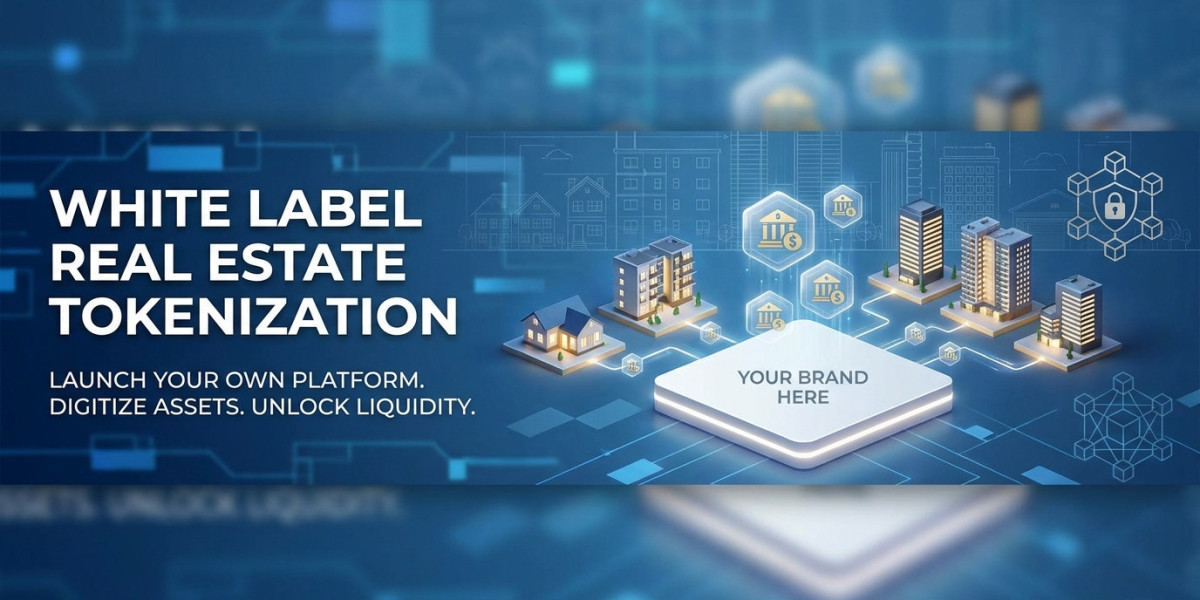

Real estate has always been one of the world’s most valuable asset classes, but it has also remained one of the least accessible. High capital requirements, lengthy paperwork, limited liquidity, geographic restrictions, and dependence on intermediaries have traditionally made property investment slow and exclusive. Tokenization is changing that model by converting real estate ownership rights, income rights, or asset-backed interests into digital tokens recorded on a blockchain. For businesses, this is not only a technology upgrade; it is a new way to build investment products, expand investor access, improve transparency, and create more efficient property markets.
The business opportunity is becoming difficult to ignore. Deloitte predicts that tokenized real estate could grow from less than US$0.3 trillion in 2024 to US$4 trillion by 2035, reflecting a 27% compound annual growth rate. This projection shows that real estate tokenization is moving beyond experimentation and into long-term financial infrastructure. McKinsey also estimates that tokenized market capitalization across asset classes could reach around US$2 trillion by 2030, excluding cryptocurrencies and stablecoins, with a possible range of US$1 trillion to US$4 trillion. For real estate companies, fintech startups, investment firms, family offices, and asset managers, the question is no longer whether tokenization matters, but how to launch it efficiently and compliantly.
Understanding White Label Real Estate Tokenization
White Label Real Estate Tokenization refers to a ready-made, customizable technology solution that enables businesses to launch their own branded real estate tokenization platform without building the entire infrastructure from scratch. Instead of spending years developing blockchain architecture, smart contracts, investor dashboards, compliance modules, wallet systems, and admin panels, businesses can adopt a pre-built framework and customize it with their brand identity, business model, asset categories, and regulatory requirements.
A White Label Real Estate Tokenization Platform typically allows property owners or asset managers to digitize real estate assets, divide ownership into blockchain-based tokens, manage investor onboarding, automate income distribution, and facilitate compliant transfers. These platforms are especially useful for companies that want to enter the tokenized real estate market quickly while maintaining control over branding, investor relationships, and product strategy.
Businesses often choose White Label Real Estate Tokenization Services because tokenization is not purely a software project. It requires legal structuring, smart contract development, blockchain integration, investor verification, security controls, custody planning, payment integration, and ongoing technical support. A white label service provider brings these capabilities together, helping businesses reduce technical complexity and accelerate time to market.
How Real Estate Tokenization Works
At its core, real estate tokenization begins by identifying an asset or portfolio that can be legally represented through digital tokens. This could be a residential property, commercial building, hotel, warehouse, rental portfolio, land parcel, or real estate fund. The asset is usually placed within a legal structure, such as a special purpose vehicle, trust, fund, or company, depending on the jurisdiction and investment model. Tokens then represent defined rights linked to that structure, such as equity ownership, revenue share, debt participation, or profit entitlement.
Once the legal and financial model is defined, smart contracts are created to manage token issuance, transfer restrictions, investor eligibility, dividend distribution, and compliance rules. Investors complete onboarding, including KYC and AML verification, before purchasing tokens through the platform. After purchase, they can view holdings, receive income distributions, access documents, and, where legally allowed, trade tokens on a secondary marketplace.
The most important point for businesses is that tokenization does not remove the need for legal compliance. A token is a digital representation of rights, but those rights must be enforceable in the real world. The U.S. SEC has emphasized that the format of a tokenized security does not change the application of securities laws. This means companies must treat tokenized real estate as a regulated financial product when it represents an investment interest.
Why Businesses Are Adopting Real Estate Tokenization
The strongest business case for tokenization is fractional ownership. Instead of selling an entire property to one buyer or raising capital from a small group of large investors, a business can divide an asset into smaller digital units. This allows investors to participate with lower minimum investment amounts, while asset owners can access a broader investor base.
Liquidity is another major advantage, although it should be understood realistically. Traditional real estate transactions can take weeks or months due to due diligence, financing, legal checks, and registration processes. Tokenized real estate can make transfers faster and more transparent, especially when compliant secondary trading is available. However, tokenization alone does not guarantee liquidity. A 2026 academic study on real-world asset markets found that tokenization and meaningful secondary-market liquidity are distinct outcomes, with liquidity depending on factors such as active users, turnover, market structure, and investor participation.
For businesses, the real value lies in combining tokenization with strong asset selection, credible valuation, investor trust, transparent reporting, and compliant trading infrastructure. A well-designed platform can create more efficient capital flows, but it must also solve the traditional problems of real estate investing: trust, governance, asset performance, and legal enforceability.
Key Features of a White Label Tokenization Platform
A strong white label platform should include more than token creation. It must support the full investment lifecycle from asset onboarding to investor management and post-investment reporting. Essential features include:
- Investor onboarding with KYC, AML, and accreditation checks
- Smart contract-based token issuance and transfer controls
- Asset listing pages with financial details, documents, and risk disclosures
- Wallet integration for storing and transferring tokens
- Fiat and crypto payment gateway support
- Admin dashboard for managing assets, investors, transactions, and reports
- Dividend or rental income distribution automation
- Compliance controls for jurisdiction-specific restrictions
- Secondary marketplace or transfer module, where permitted
- Security audits, role-based access, and data protection systems
For businesses, the admin layer is just as important as the investor-facing interface. A real estate tokenization business must manage cap tables, ownership records, investor communications, compliance reports, asset performance updates, and transaction history. A platform that only issues tokens but lacks operational tools will not be sufficient for long-term scaling.
Real-World Business Models
White label real estate tokenization can support several business models. A real estate developer may tokenize future rental income from a commercial property to raise capital for expansion. An investment company may launch a branded platform where accredited investors can buy fractional exposure to income-producing properties. A hospitality group may tokenize ownership interests in resort properties, giving investors access to revenue generated from bookings. A property marketplace may add tokenized investments as a new product line alongside traditional listings.
Another practical model is portfolio tokenization. Instead of tokenizing one building, a company can tokenize a diversified basket of properties. This can reduce concentration risk for investors and make the product more attractive to those who want exposure to real estate income without managing individual properties. Businesses can also structure tokens around debt, where investors receive fixed returns, or equity, where returns depend on rental income and asset appreciation.
The most successful models are likely to be those that combine blockchain efficiency with real-world financial discipline. Investors will not buy tokens simply because they are blockchain-based; they will evaluate location, yield, occupancy, legal rights, exit options, management quality, and risk disclosures.
Compliance and Regulation
Compliance is the foundation of any serious real estate tokenization project. In many jurisdictions, tokenized real estate interests may be treated as securities, collective investment products, fund units, or digital assets subject to financial regulation. Businesses must therefore design their platforms around investor eligibility, disclosure obligations, transfer restrictions, custody rules, taxation, and reporting.
In the European Union, MiCA created a framework for crypto-assets not already covered by existing financial services laws, including rules on transparency, disclosure, authorization, and supervision. However, tokenized real estate that qualifies as a financial instrument may fall under other securities regulations rather than MiCA alone. This illustrates why legal classification matters. The same technical token can be regulated differently depending on what rights it represents and how it is sold.
A responsible white label provider should not offer a one-size-fits-all compliance promise. Instead, it should support configurable compliance workflows, legal documentation integration, jurisdiction-based investor restrictions, and audit-ready transaction records. Businesses should work with legal advisors before launching, especially if they plan to raise funds from multiple countries.
Benefits for Investors and Asset Owners
For investors, tokenized real estate can reduce entry barriers, improve transparency, and offer more flexible portfolio construction. Instead of committing large sums to a single property, investors can diversify across multiple assets, locations, and income profiles. Blockchain records can also improve traceability by creating a tamper-resistant history of token issuance and transfers.
For asset owners, tokenization can unlock new sources of capital. Developers, property managers, and fund sponsors can reach investors beyond local networks and traditional institutional channels. They can also design more flexible investment products, such as fractional rental income rights, tokenized funds, or property-backed debt instruments.
For platform operators, the opportunity lies in building a branded investment ecosystem. A white label model allows businesses to control the user experience, pricing, asset strategy, and investor relationships while relying on proven technical infrastructure. This is especially valuable in a market where speed, credibility, and compliance can determine whether a platform succeeds.
Challenges Businesses Must Plan For
Despite its potential, real estate tokenization is not a shortcut to effortless fundraising. The biggest challenges include regulatory uncertainty, limited secondary liquidity, investor education, asset valuation, cybersecurity, custody, and integration with traditional property systems. Real estate remains an off-chain asset, meaning ownership, title, rental income, maintenance, disputes, and taxes still exist in the physical and legal world.
Another challenge is trust. Investors need confidence that the underlying property exists, is properly valued, is legally connected to the token, and is managed professionally. This requires transparent documentation, third-party audits, property reports, clear risk disclosures, and reliable governance. A beautiful platform cannot compensate for weak asset quality or unclear legal rights.
Businesses should also be careful about exaggerated claims. Tokenization can improve efficiency and access, but it does not eliminate market cycles, tenant risk, vacancy risk, legal disputes, or property depreciation. A credible platform positions tokenization as an infrastructure advantage, not a guarantee of returns.
How to Choose the Right White Label Provider
The right technology partner should offer both blockchain expertise and real estate investment understanding. Businesses should evaluate providers based on smart contract quality, security practices, customization flexibility, compliance readiness, scalability, wallet support, marketplace capability, and post-launch support. It is also important to check whether the provider can support multiple blockchain networks, integrate fiat payments, and adapt the platform for different jurisdictions.
A strong provider should help with token architecture, investor workflows, admin operations, security audits, and deployment strategy. Businesses planning to launch a tokenized property marketplace can [explore the solution] as a natural next step when evaluating platform capabilities and implementation support.
The Future of White Label Real Estate Tokenization
The future of real estate tokenization will likely be shaped by institutional adoption, clearer regulations, better custody solutions, stronger identity systems, and improved secondary markets. As tokenized real-world assets mature, real estate platforms will need to move from basic token issuance to full digital investment infrastructure. This means better reporting, automated compliance, real-time asset data, regulated marketplaces, and integration with traditional financial systems.
The companies that succeed will be those that treat tokenization as a serious financial product, not just a blockchain trend. They will combine legal clarity, high-quality assets, investor protection, secure technology, and transparent operations. White label platforms can play a major role by giving businesses a faster and more cost-effective path to market, but long-term success will depend on execution, governance, and trust.
Conclusion
White label real estate tokenization gives businesses a powerful way to enter the digital asset economy, raise capital more efficiently, broaden investor access, and modernize property investment models. With the right strategy, compliance structure, and technology partner, companies can build scalable platforms that bridge traditional real estate and blockchain-based finance. For businesses seeking dependable development support, Blockchain App Factory provides the best services for launching secure, customizable, and future-ready real estate tokenization platforms.
FAQs
1. What is white label real estate tokenization?
White label real estate tokenization is a ready-made, customizable solution that allows businesses to launch their own branded platform for converting real estate assets into blockchain-based digital tokens.
2. Is real estate tokenization legal?
Real estate tokenization can be legal, but it must follow the relevant securities, property, tax, and financial regulations in each jurisdiction. Legal structuring is essential before launching a platform.
3. How do investors earn from tokenized real estate?
Investors may earn through rental income distributions, profit sharing, interest payments, or asset appreciation, depending on how the token is legally and financially structured.
4. Why should a business choose a white label platform instead of building from scratch?
A white label platform reduces development time, lowers technical risk, provides tested infrastructure, and allows businesses to focus on branding, asset acquisition, compliance, and investor growth.
5. Does tokenization guarantee liquidity?
No. Tokenization can make transfers easier, but actual liquidity depends on investor demand, regulatory permissions, marketplace design, asset quality, and secondary trading infrastructure.







